Skiing for beginners in Romania comes down to three things: a gentle slope, an hour of lessons with an instructor, and gear that actually fits. Everything else follows. The classic mistake isn't a lack of talent — it's spending day one on a slope that's too hard, in borrowed boots that crush your toes, having never held a pole. This guide is written so that doesn't happen to you.
The good news: Romania has several areas that are excellent for learning, with wide blue runs, gentle chairlifts, and ski schools where instructors talk with you, not over you. The less-good news: January and February weekends get crowded, and the good instructors book out days in advance. Plan ahead, don't improvise.
Where to learn best
Three areas stand out for your first day on skis. Take them in this order if you're a complete beginner.
Poiana Brașov — the safe choice
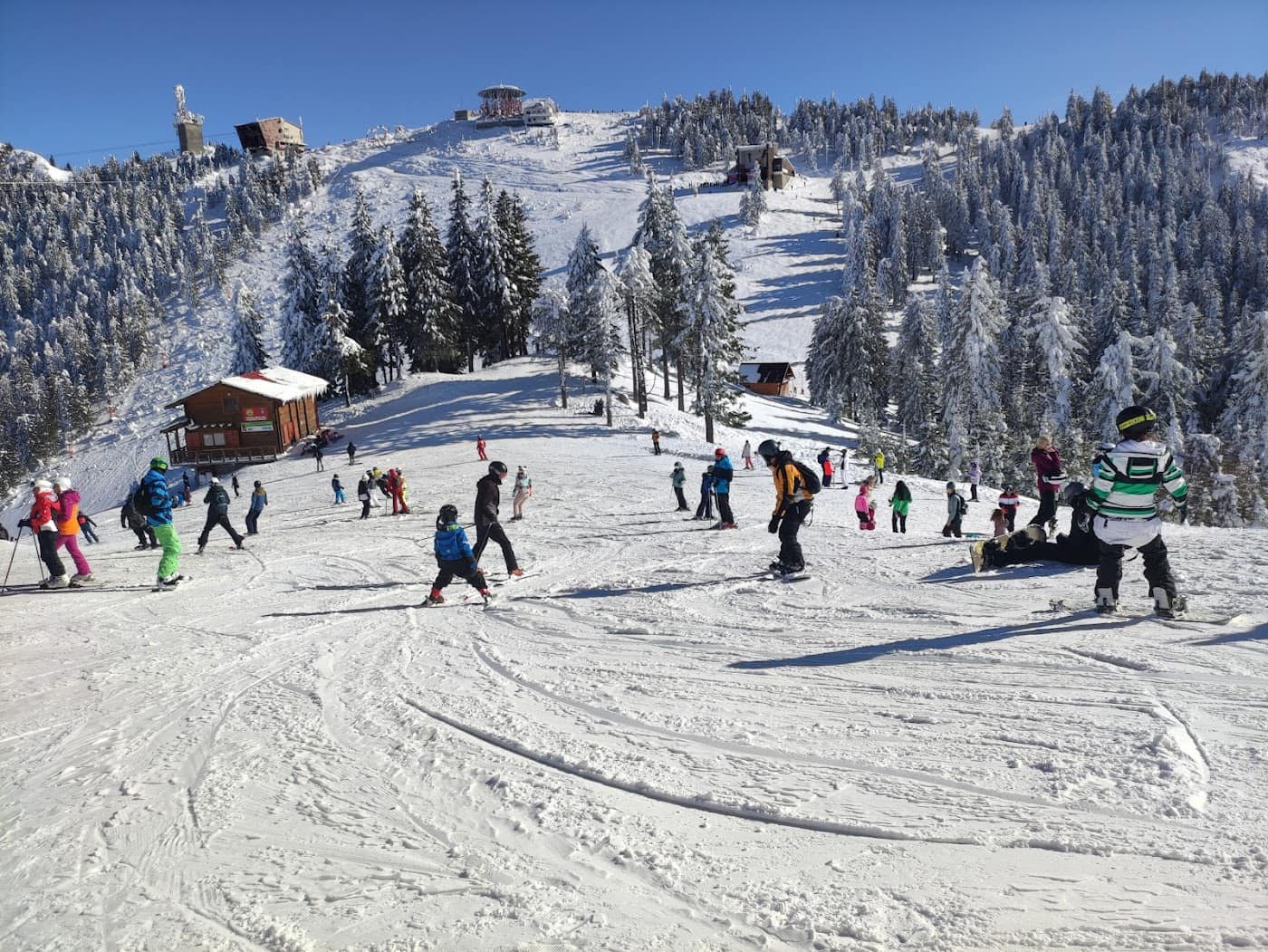
If you don't want to overthink it, go to Poiana Brașov. It's the most complete beginner area in the country: wide learner runs at the bottom (the Bradul / Sub Teleferic area is the classic "kindergarten"), a high concentration of ski schools and instructors, plus all the infrastructure — rentals, cabins, mountain rescue close by. The gondola and chairlifts take you up once you find your nerve, but your first hours happen down low, on flat ground.
In practice: you can arrive from Brașov in 20 minutes in the morning, do a day of lessons, and head back in the evening. For a trial weekend, it's the least hassle.
Predeal — quiet and close to Bucharest
Predeal is the highest town in Romania and its slopes suit beginners well, without Poiana's crowds. It's right off the motorway, so reachable on a single tank from Bucharest. The Clăbucet run has gentle sections, and the vibe is more relaxed — a real plus when you're still learning and don't want to feel like you're in the way of people bombing downhill.
Sinaia — learn low, admire high
Sinaia has a quirk: the serious terrain is up high, at the 1400–2000 m level, but for beginners what matters are the learner zones at the base and the gentle runs around the 1400 m mark. You ride the cable car up, take lessons on the mellow plateaus, and when you're ready, there's a domain above you that will keep you busy for years. It's the resort town with the best long-term "progression curve."
Slope data (lengths, difficulty grades, which lifts are running) is indicative and changes from season to season. Before you go, check the resort's official site and the snow report, plus the mountain weather for the day.
Ski school: why you don't skip it
The best investment on day one isn't expensive gear — it's the instructor. In two or three hours you learn the correct stance, the "snowplough" brake (pizza), and your first controlled turn — things you'll learn wrong on your own and then spend months unlearning.
- Private vs. group lessons: private is faster and costs more per hour; group is cheaper and more social, but the instructor splits attention among 4–6 people.
- Book early on peak weekends (January–February). Good instructors fill up.
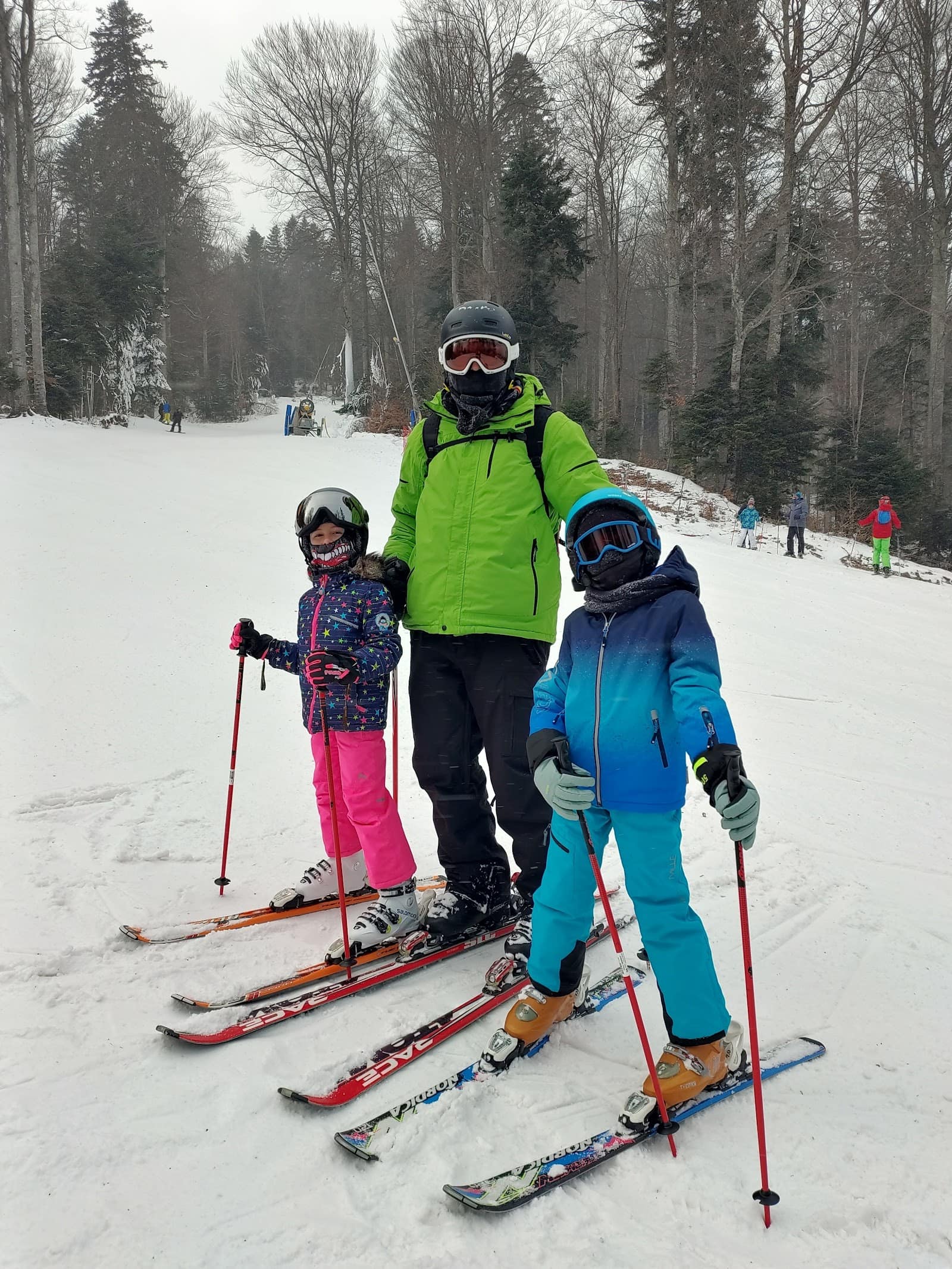
- Ask about kids if you're with family — many schools have separate programmes, with magic carpets instead of drag lifts.
A tip from people who've been through it: don't watch tutorials and assume you've got it. On the slope, with boots on, everything is different. An hour with someone beside you is worth ten clips.
Gear: what to rent and what to buy
For your first outing, buy nothing beyond a base layer and gloves. Skis, boots, and poles you rent at the resort — and that's better, because you don't yet know what suits you.
What you rent (the standard package at any rental shop in the resort):
- Skis — for a beginner, shorter than you'd expect (roughly chin height). Easier to manoeuvre.
- Boots — the critical part. They should be firm, not painfully tight. Toes brush the front when you stand straight and pull back when you bend your knees. Insist on trying two or three sizes.
- Poles — minor; the instructor sizes them for you.
- Helmet — mandatory as a mindset, even if adults aren't legally required to wear one. Rentable.
What you bring from home (or buy once): a thermal base layer, a waterproof jacket and trousers, ski gloves (not city ones), thin ski socks (NOT thick wool — they bunch in the boot and make you cold), sunglasses or goggles, SPF cream. Details on how to layer are in our mountain hiking gear guide — the layering principle is the same in winter on the slope.
The number-one clothing mistake: jeans. They get wet, freeze, turn into planks. Nothing cotton against the skin.
Lift types: what carries you up
As a beginner you'll meet several kinds of "uphill transport," from friendliest to those that take a bit of technique:
- Magic carpet (tapis roulant) — a belt you simply stand on. The "kindergarten" zone. Zero stress.
- Drag lift / button or T-bar — tows you while you stand on your skis. Looks simple, but it throws you off balance at first; ask the instructor for a trial.
- Chairlift — you sit, it lifts you into the air. You must position yourself for boarding and step off cleanly. More intimidating the first time, but comfortable.
- Cable car / gondola — enclosed cabin, you take your skis off and carry them. The most comfortable way to gain altitude.
Start with the carpet and the button lift. The chairlift comes once you've mastered braking, so you can ski down the run beneath it.
Indicative budget for a weekend
Numbers vary a lot by resort and season, but to give you a sense, a beginner weekend involves:
- Ski pass — by day or by hours; many beginners buy a few-hour ticket because fatigue takes you down before noon.
- Gear rental — skis + boots + poles package, per day.
- Ski school — per hour, private or group.
- Lodging + meals — see options for mountain lodging and guesthouses; book early in season.
The money tip: the first time, buy only a half-day ticket and one lesson. If it grabs you, come back the next day for a full day. Don't pay for a full-day pass only to ski for an hour and quit with jelly knees.
Day one, step by step
- Arrive early (by 9:30), grab gear before the rental queue builds.
- Put the boots on IN the shop and walk a few steps — if they hurt, change now, not up on the slope.
- Go to the meeting point with your instructor. First hour: how to fall and get up, how to stand on skis, the snowplough.
- Break before you're tired. Fatigue = accidents.
- Two to three hours max on day one. Stop while you're still having fun, not when you can't go on.
The season: when it makes sense to go
The ski season in Romania runs roughly from December to March, sometimes into April at high altitude. The most reliable snow is in January–February. Early season (December) and late season (March) depend heavily on snow cannons and the weather — check the resort's snow report first. For a first lesson, a clear, windless day is far more pleasant than an "authentic" blizzard; check the weather and the road conditions to the resort, especially after snowfall.
See the full overview of the country's areas in the skiing in Romania guide if you want to choose among several resorts.