Mountain hiking gear is not bought item by item; it is thought of as a system: what you wear, what you carry on your back, and what you never leave without. The checklist below is organized by season and by trip type, so you don't haul unnecessary weight across the Bucegi plateau in July and don't freeze on a Făgăraș ridge in March.
Before anything else, two rules that matter more than any brand. First: weather changes fast at altitude, and a clear morning does not guarantee a clear afternoon. Check the weather and road conditions right before you leave, not the evening before. Second: tell someone your route and your approximate return time. Good gear helps, but it does not replace judgment.
Boots: the starting point
If you invest in one thing, make it your footwear. A good hiking boot keeps you on the trail for hours without blisters and protects your ankle on scree and wet paths.
- Day hike on marked trails, summer: a mid boot or even a sturdy trail shoe with a grippy outsole (Vibram-type or equivalent). What matters is traction on wet rock and roots.
- Ridges, scree, long days: a high, stiff boot that supports the ankle under the weight of a pack. On the terrain in Piatra Craiului, where limestone turns slick after rain, support matters more than saving a few grams.
- Winter: a stiff, insulated boot compatible with crampons. A soft summer boot won't hold crampons in place and won't insulate you in snow.
The golden rule: never wear brand-new boots on a long hike. Break them in over a few short outings first.
The three-layer clothing system
In the mountains you don't dress "thick" or "thin" — you dress in layers you add and shed depending on effort and wind. Cotton is the enemy: it traps sweat, chills you, and won't dry.
- Base layer (next-to-skin): a technical synthetic or merino wool shirt. It wicks sweat and keeps you dry.
- Mid layer (insulation): a fleece or a light down/synthetic jacket. This is the layer you adjust most often.
- Outer layer (protection): a waterproof, windproof shell, ideally with a breathable membrane. It shields you from the two things that cause hypothermia: water and wind.
Add quick-drying hiking trousers (not jeans), a pair of light gloves, and a hat even in summer — wind bites on the summits. A rain shell is mandatory year-round, no matter how clear the sky looks at the start. For how to read a forecast and recognize an afternoon storm, see the mountain safety guide.
The backpack and how to pack it
For a day hike, a 20–30 litre pack is plenty. For multi-day trips with hut accommodation, 35–45 litres; for tent and sleeping bag, 50+ litres.
- Keep heavy items (water, food) close to your back and in the middle of the pack so they don't pull you backward.
- Use a rain cover or dry bags for clothes and electronics. A "water-resistant" pack gives up in sustained rain.
- The hip belt transfers weight off your shoulders — cinch it properly, don't ignore it.
Navigation: map, phone and a plan B
In good weather, the markings on classic trails are enough. The trouble starts in fog, or when the markings vanish under snow. That's why navigation always has a plan B.
- App with offline maps: download the area map BEFORE you go, while you still have signal. At altitude the signal is fickle. Apps with downloadable tracks show your position even without a network, via GPS.
- Power bank: the screen and GPS drain the battery fast. In the cold the battery drops faster still — keep the phone close to your body.
- Paper map and compass for long ridge traverses, plus the basic knowledge to use them. On the Făgăraș ridge traverse, where you can be hours from any hut, redundancy is not overkill.
Water, food and the first-aid kit
Misjudged hydration ruins your hike more reliably than rain does. For a day on the trail, plan for around 1.5–2 litres of water, more in the heat. Don't rely on springs — many are seasonal or unsafe.
- Food: something substantial for lunch plus energy snacks (dried fruit, bars, nuts). Always keep an "emergency" reserve you only eat if the hike runs long.
- First-aid kit: blister plasters (the hydrocolloid kind), an elastic bandage, antiseptic, a painkiller, a survival blanket (the silver/gold foil weighs nothing and can save a life), plus any personal medication.
- Headlamp: even on a day hike. If you run late and darkness catches you, free hands make the difference. Check the batteries or carry a spare set.
Summer vs. winter: what changes
In summer, the emphasis falls on sun protection (sunglasses, cream, cap — UV is stronger at altitude) and hydration. Trekking poles help on long descents and protect your knees.
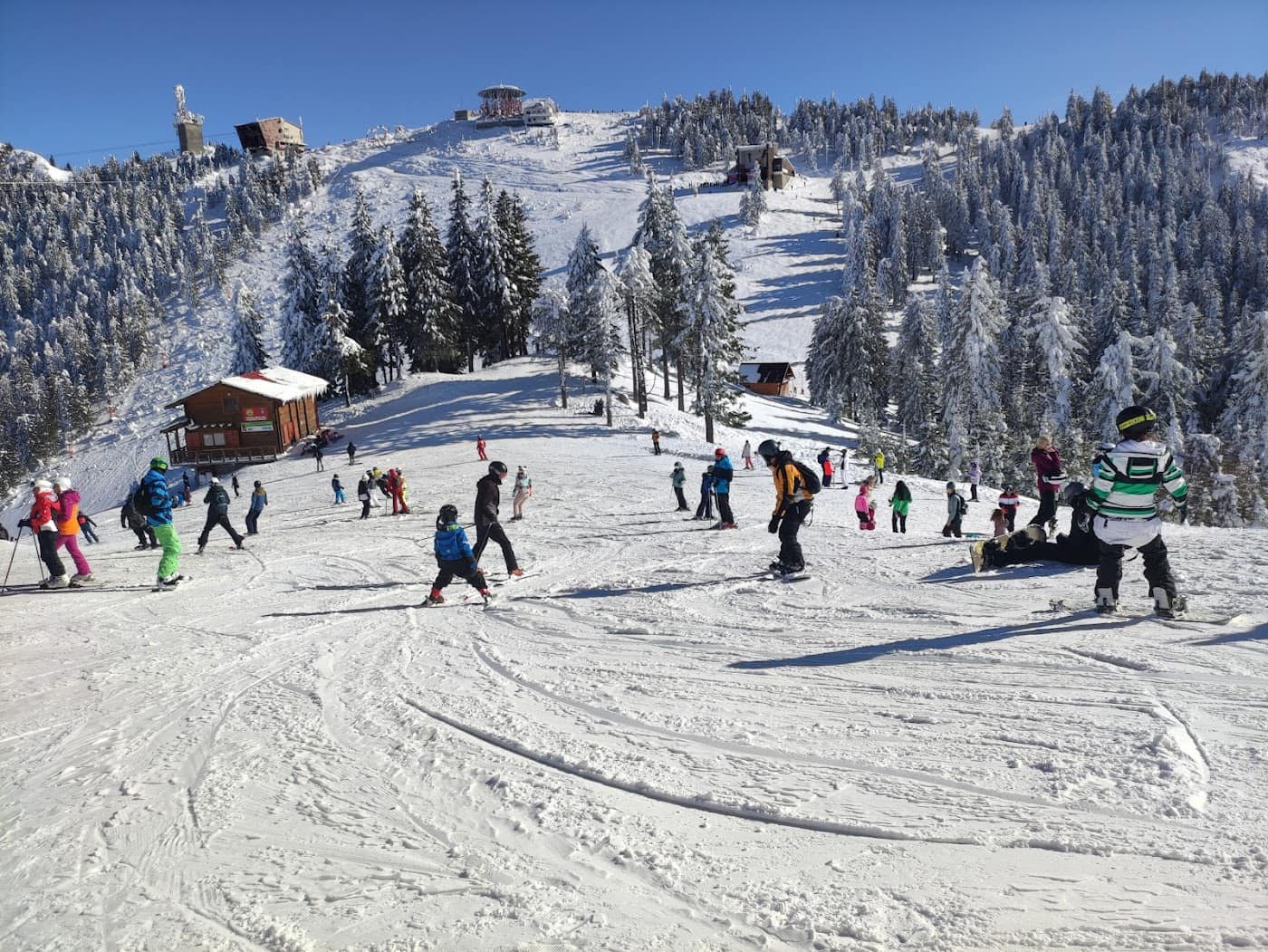
In winter, the equation changes completely. On trails with hard snow or ice you need crampons compatible with your boots and often an ice axe, plus the skill to use them — they are not decorative accessories. Poles with winter baskets, gaiters that keep snow out of your boots, double gloves, and a thicker mid layer become mandatory. Avalanche risk on steep slopes is real; if you lack training, choose gentle winter trails or go with a guide. Details in the safety guide.
Day hike vs. multi-day
On a day hike you carry only the essentials: layers, water, food, kit, headlamp, navigation, rain shell. Light and mobile.
On a multi-day trip you add dry changes (especially socks), a sleeping bag suited to the hut/tent, minimal toiletries, more food, and careful weight management. Here every gram counts on the climb. For multi-day inspiration, see hiking in Bucegi.
What NOT to forget (the short checklist)
- Rain/wind shell — even under a clear sky
- Headlamp with good batteries
- Survival blanket
- Charged phone + power bank + the number 112 and the Salvamont app
- Downloaded offline map
- Enough water and a reserve snack
- You told someone your route and return time