Both fit inside a summer week, and both are best done by car. That is where the similarities stop. The Apuseni are a mountain range you visit from underneath: limestone, caves, gorges, sinkholes, water that vanishes and resurfaces kilometres away. Bucovina and Rarău are a mountain range you visit from above: rounded ridges, vast meadows, painted monasteries and villages that still work the land. The choice isn't between "more beautiful" and "less beautiful". It's between geology and culture.
What the Apuseni do well
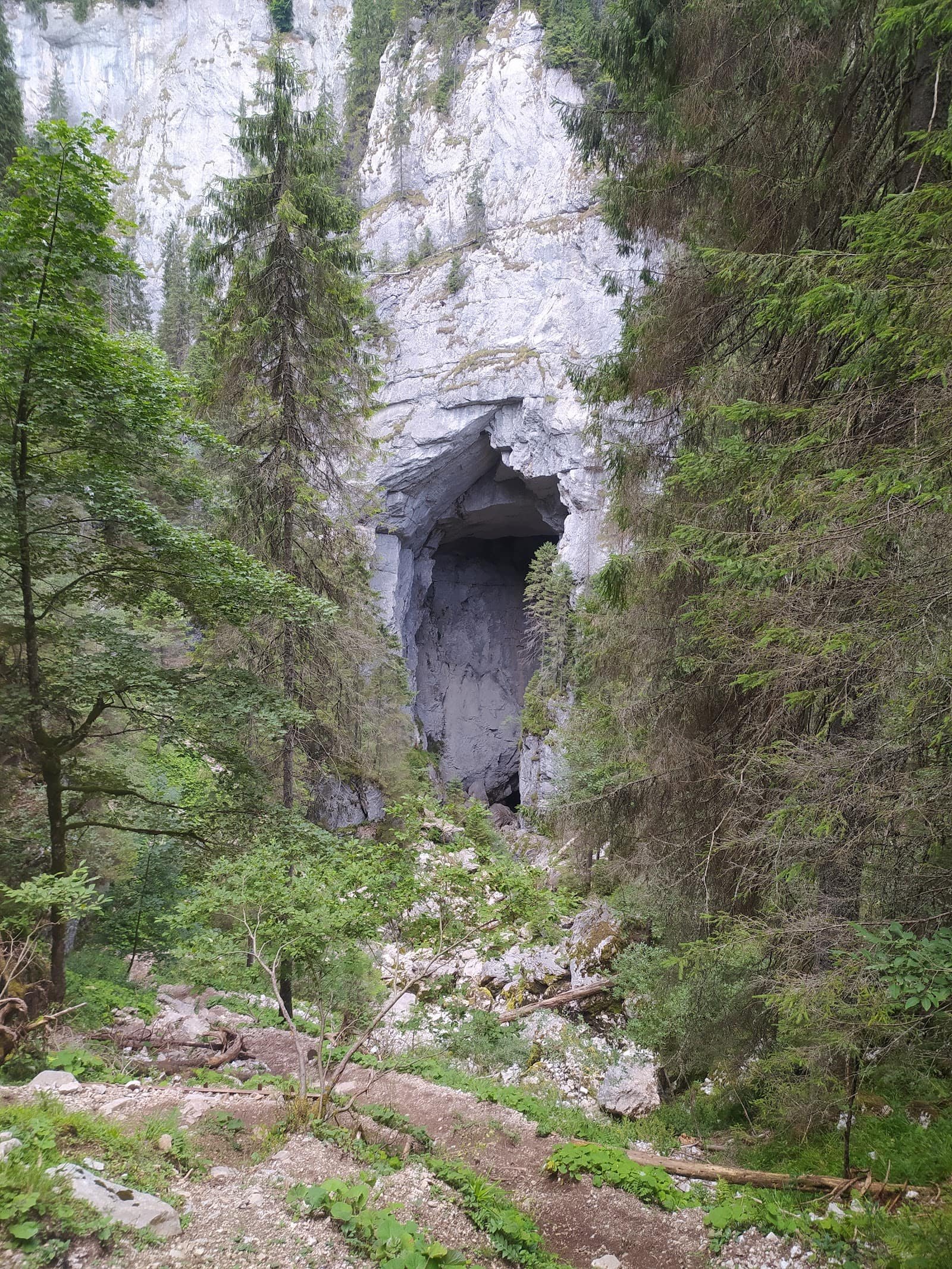
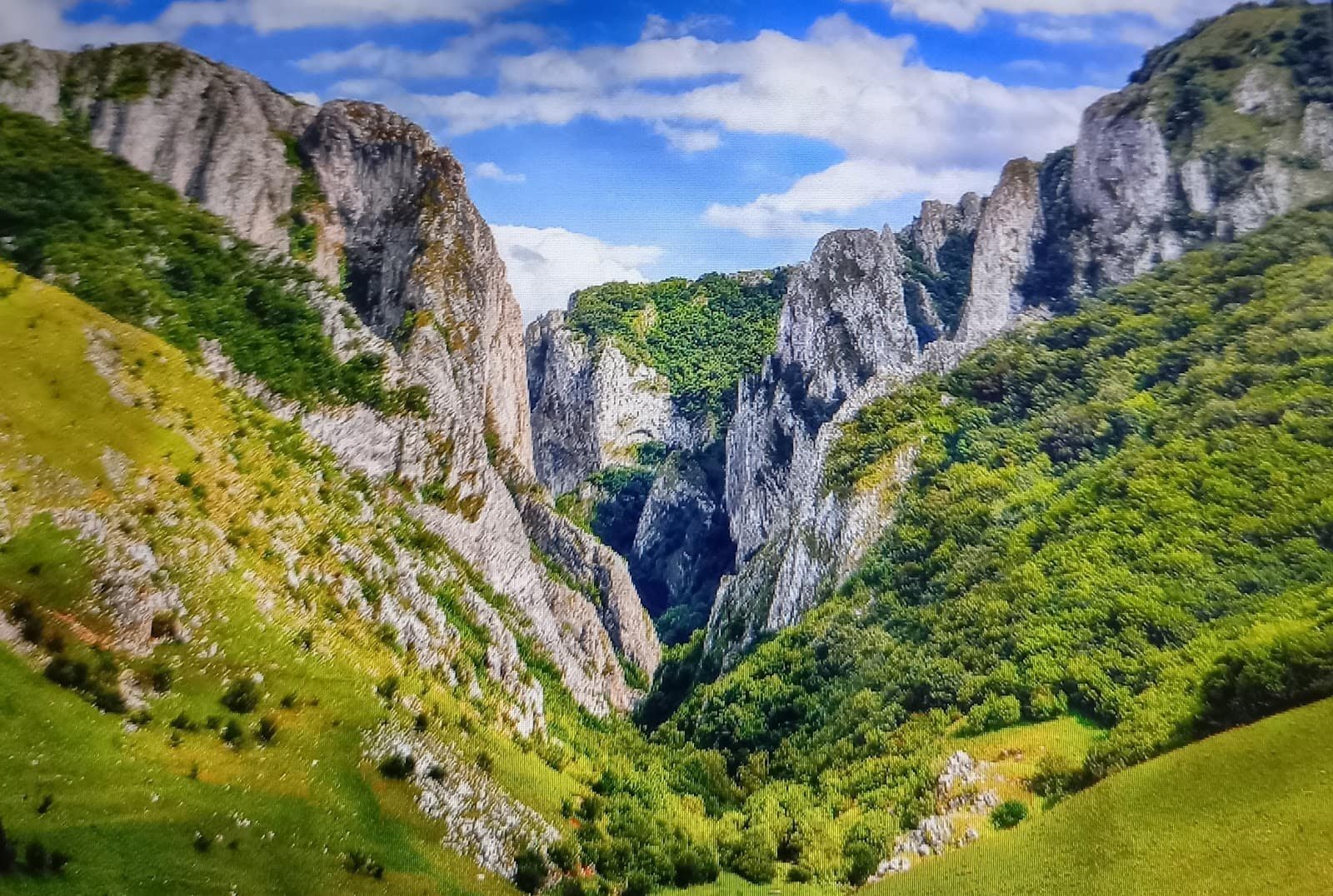
The Apuseni deliver vertical drama inside a gentle landscape. The karst plateau of Padiș is the best example: an area where you walk a whole day among gorges, shafts and karst springs, with Cetățile Ponorului as the climax. Add Scărișoara Cave with its underground ice, Bears' Cave for the formations, and Turda Gorge as an aperitif on the way in, and you already have a week.
It is also the region with the best density of sights per kilometre: you rarely drive more than an hour between two things worth stopping for.
The cost: the roads. Inside the Apuseni Natural Park many sections are forestry tracks — stone, ruts, and an approach to Padiș that is no stroll for a low car. Check road conditions and don't build your day around a road you know nothing about.
What Bucovina does well
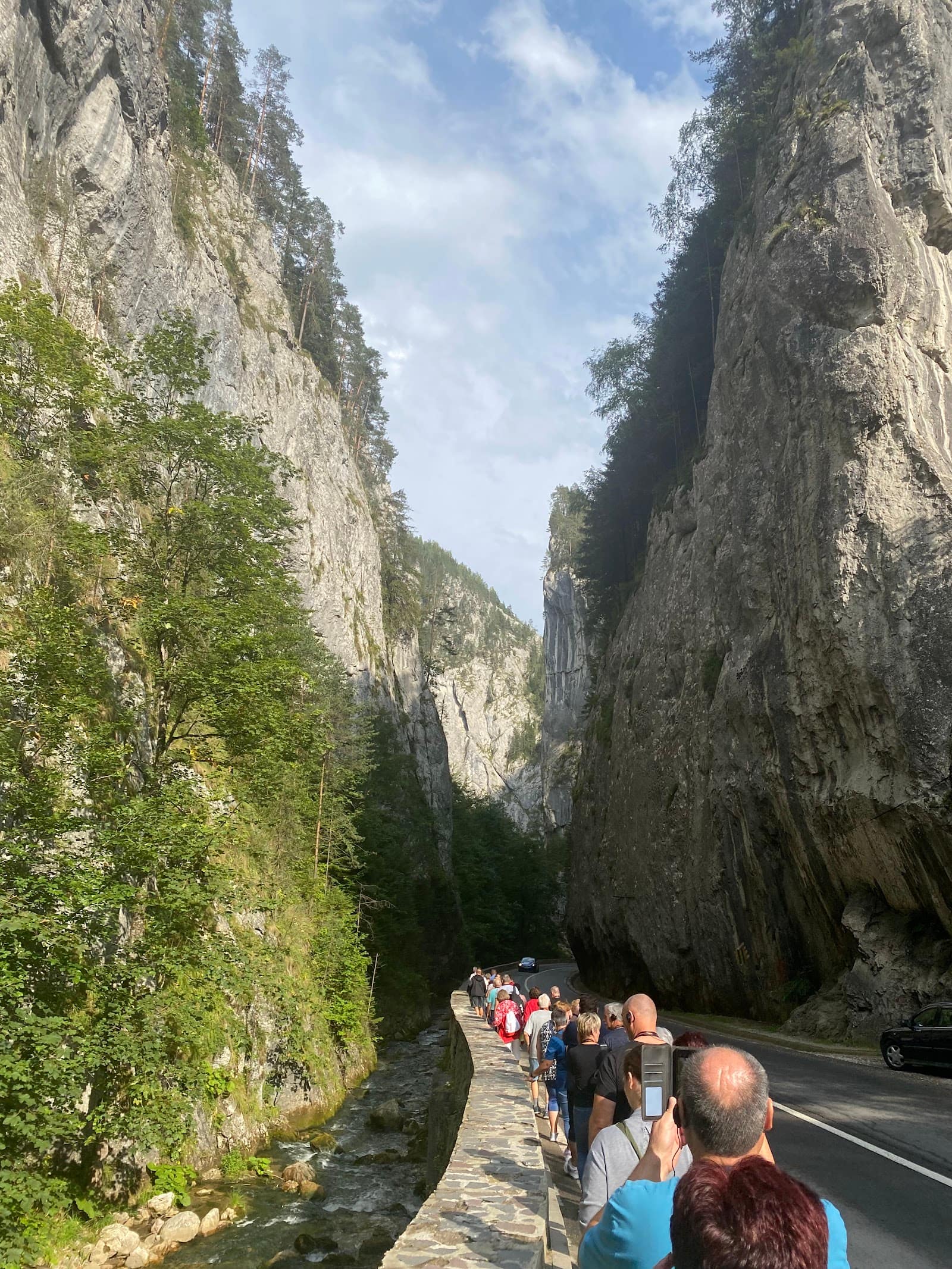
Bucovina is the region where the road trip becomes the point rather than the means. Transrarău — the road climbing towards the Rarău massif — is one of the most beautiful mountain roads in the country and, unlike the great alpine routes, demands neither fitness nor nerve. At the top, Pietrele Doamnei offer exactly the rock silhouette you picture when you say "mountain", at the end of a short walk from Cabana Rarău.
The second argument is cultural and, for many, decisive: the painted monasteries, the villages with carved wooden gates, the local cooking. Nowhere else in the Romanian mountains is there this much heritage at the roadside, and the restaurants and guesthouses make up half the experience.
The cost: distance and rhythm. Bucovina is far from almost everything, and if you're coming from the south or west, the first and last days go on the road. And if you want alpine hiking, with ridges and exposure, this is not where you'll find it.
Head to head
Physical effort. Apuseni: moderate, with full-day routes and technical sections on wet limestone. Bucovina: easy, dominated by short panoramic walks.
Road access. Bucovina wins outright: tarmac and signage. The Apuseni demand attention, ground clearance and patience on the final kilometres.
Crowds. In summer, Padiș and the major caves fill up at weekends; Bucovina spreads visitors across dozens of villages and monasteries, so it feels freer — August's peak aside.
Scenery. Apuseni: dramatic but hidden — you have to descend, enter, search. Bucovina: open and panoramic, with the landscape delivered straight through the windscreen.
Season window. The Apuseni are at home in high summer, when caves become a blessing at 30 degrees. Bucovina gains in September, when the colours and the light change.
Weather risk. In the Apuseni, rain turns limestone into a skating rink and forestry roads into mud. In Bucovina, rain spoils the panorama but rarely blocks the programme. Check the weather and the live cameras either way.
The verdict
Choose the Apuseni if you want many short stops and one headline sight per day, if geology fascinates you, if your car handles stone tracks, and if you're travelling in July or August, when underground coolness becomes a serious argument.
Choose Bucovina if you want beautiful kilometres more than hard paths, if your group includes people who don't climb, if you want food and architecture to matter as much as the mountain, or if you're going in September.
In short: the Apuseni are a road trip about nature, Bucovina one about place. The first tires you physically, the second from behind the wheel.
Before you leave, save the Salvamont number, plan the days with our itineraries, and book early — both regions have limited capacity in the good villages.