Romania's peaks above 2500 m can be counted on one hand, and nearly all of them are crammed into the Făgăraș Mountains. It is a fact that surprises many hikers: the country has hundreds of summits over 2000 m, yet only a handful cross the 2500 m mark, and the gaps between them are sometimes measured in metres. This guide walks through each one, with verified altitudes, the real difficulty of the climb and what you need to know before setting off.
First, a sense of scale. Romania's high peaks sit around 2500 m — no higher. There is no comparison here with the 4000 m Alps, let alone the Himalayan eight-thousanders. That does not make them trivial: shifting weather, exposed ridges and long distances turn a 2544 m Carpathian summit into a route that demands respect.
The list of peaks above 2500 m
Here are the summits that clearly clear the bar, by altitude, plus the borderline case of Mount Omu.
- Moldoveanu — 2544 m. The country's highest point, in the Făgăraș range. No road, no cable car; you reach it on foot only, usually as a two-day trip with a night at a hut or in a tent.
- Negoiu — 2535 m. The second highest, also in Făgăraș. The classic route via Strunga Dracului includes a cabled, rocky section that makes it more technical than Moldoveanu.
- Parângu Mare — 2519 m. The high point of the Parâng Mountains, in the south. More remote, less travelled, accessed from Rânca and the Parâng plateau.
- Peleaga — 2509 m. The highest peak in Retezat, in the heart of the national park, ringed by glacial lakes. One of the finest alpine outings in the country.
- Omu — 2514 m. In the Bucegi. It technically tops 2500 m, so it makes the list, though many treat it apart because it has a hut on the summit and cable-car-assisted access close to the plateau.
Pietrosul Rodnei, the highest peak in the Rodnei Mountains, stops at 2303 m — below the bar, but worth a mention as king of the north. The rest of the "two-five-hundreds" are essentially ridge neighbours of Moldoveanu and Negoiu along the Făgăraș crest.
Făgăraș, home of the high altitudes
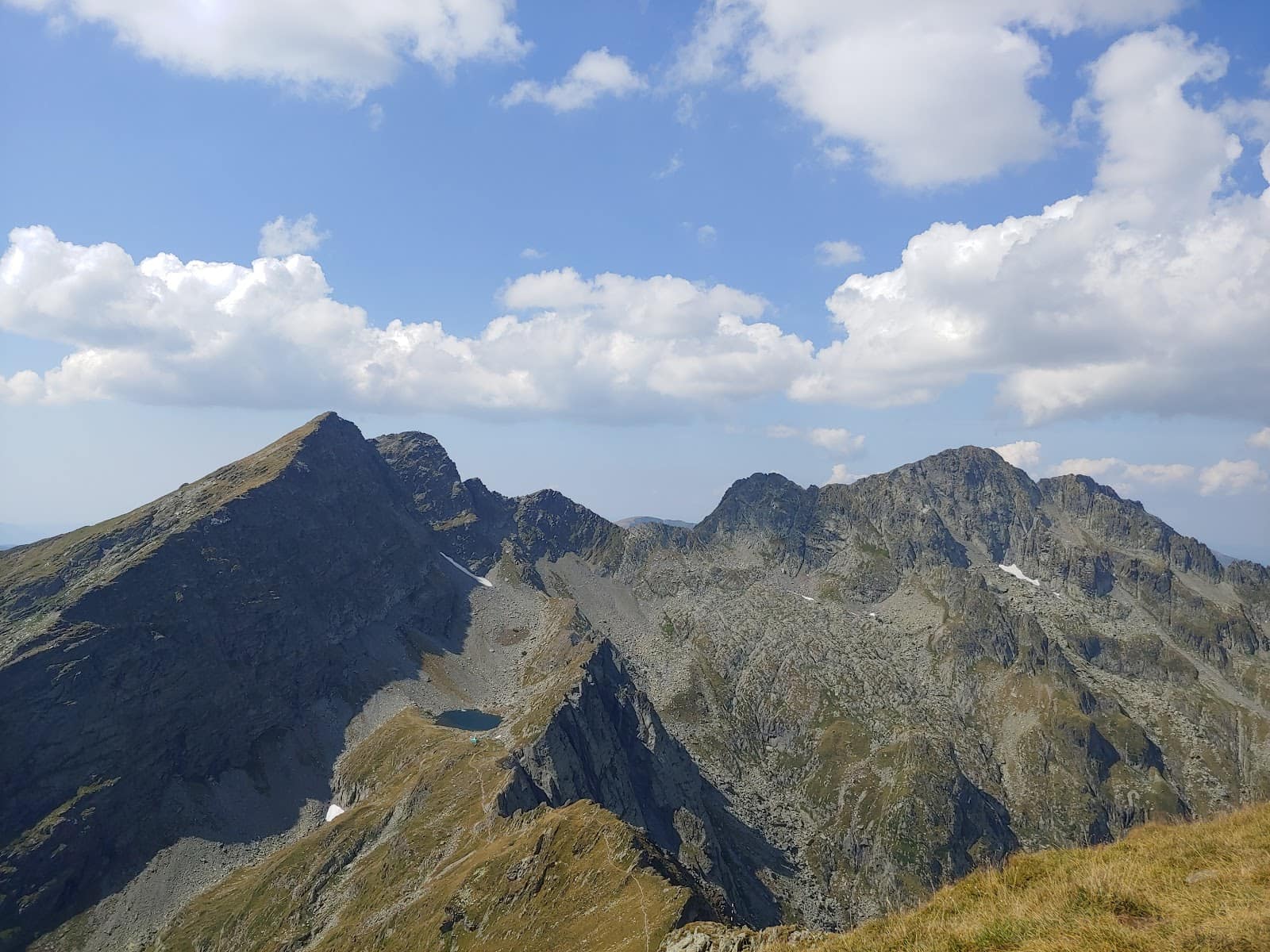
If you want to tick off the highest summits, the road runs through Făgăraș and the Transfăgărășan. The main ridge gathers Moldoveanu and Negoiu less than ten kilometres apart as the crow flies, plus a string of other peaks over 2400-2500 m.
The most elegant way to link them is the full traverse, described at length in our Făgăraș ridge traverse guide. It is a multi-day, exposed route with no reliable water sources over long stretches and no quick escape in a storm.
Moldoveanu in brief
For full details see the dedicated Mount Moldoveanu page. In short: the most-used ascent leaves from Valea Sâmbetei, with a night at the hut, then attacks the summit the next day along a ridge that is not technical but is long and tiring. No section requires climbing gear, but navigation in fog is hard.
Negoiu in brief
Mount Negoiu is more demanding. The classic line goes through Strunga Dracului, a cabled gully where your hands come seriously into play. In wet or icy conditions it becomes dangerous; a longer but safer bypass below the ridge exists.
How hard is it, really
The difficulty of these peaks does not come from altitude — at 2500 m there is no real altitude sickness — but from three factors:
- Distance and elevation gain. Most are long single-day or multi-day routes, with 1200-1500 m to climb.
- Ridge exposure. On Făgăraș you are often on a knife edge, with drops on both sides; no place for fear of heights or an unsure step.
- Weather. In summer, electrical storms can build in under an hour. Always check the mountain forecast and start early.
For all of them, the friendly season is July to September. Otherwise, snow and ice turn the hikes into winter alpine routes needing crampons and an ice axe. The access road can close; check the state of the mountain roads before leaving, especially on the Transfăgărășan.
How to plan them smartly
Do not try to "collect" them all in one weekend. A sound approach:
- Fit beginner: Peleaga in Retezat, as a first high-peak outing, beautiful and with no obligatory technical sections.
- Intermediate: Moldoveanu over two days, with a hut at the base.
- Advanced: Negoiu by the classic route, or a section of the Făgăraș traverse that chains several peaks at once.
For lodging in the area, see the network of mountain guesthouses near the trailheads. And if you want routes beyond the record summits, browse our pick of the top hiking trails in Romania.
Frequently asked questions
How many peaks above 2500 m does Romania have?
Very few, and almost all in Făgăraș. Clearly over the bar are Moldoveanu (2544 m), Negoiu (2535 m), Parângu Mare (2519 m), Omu (2514 m) and Peleaga (2509 m), plus other ridge neighbours in Făgăraș.
What is the highest peak in Romania?
Moldoveanu, 2544 m, in the Făgăraș Mountains. It is reached on foot only; there is no road or cable car to the summit.
Do I need mountaineering gear?
In summer, on the classic hiking routes, no — good boots, rain and wind protection and solid navigation are enough. The exceptions are the cabled sections (Strunga Dracului toward Negoiu) and any winter outing, which requires crampons, an ice axe and experience.
Which is the hardest to climb?
Subjectively, Negoiu via Strunga Dracului, because of the cabled gully and the exposure. Moldoveanu is less technical but longer.
When is the best time to climb them?
July to September, when the snow has melted off the ridge and storm risk is easiest to manage. Start early in the morning and check the forecast in the weather section.