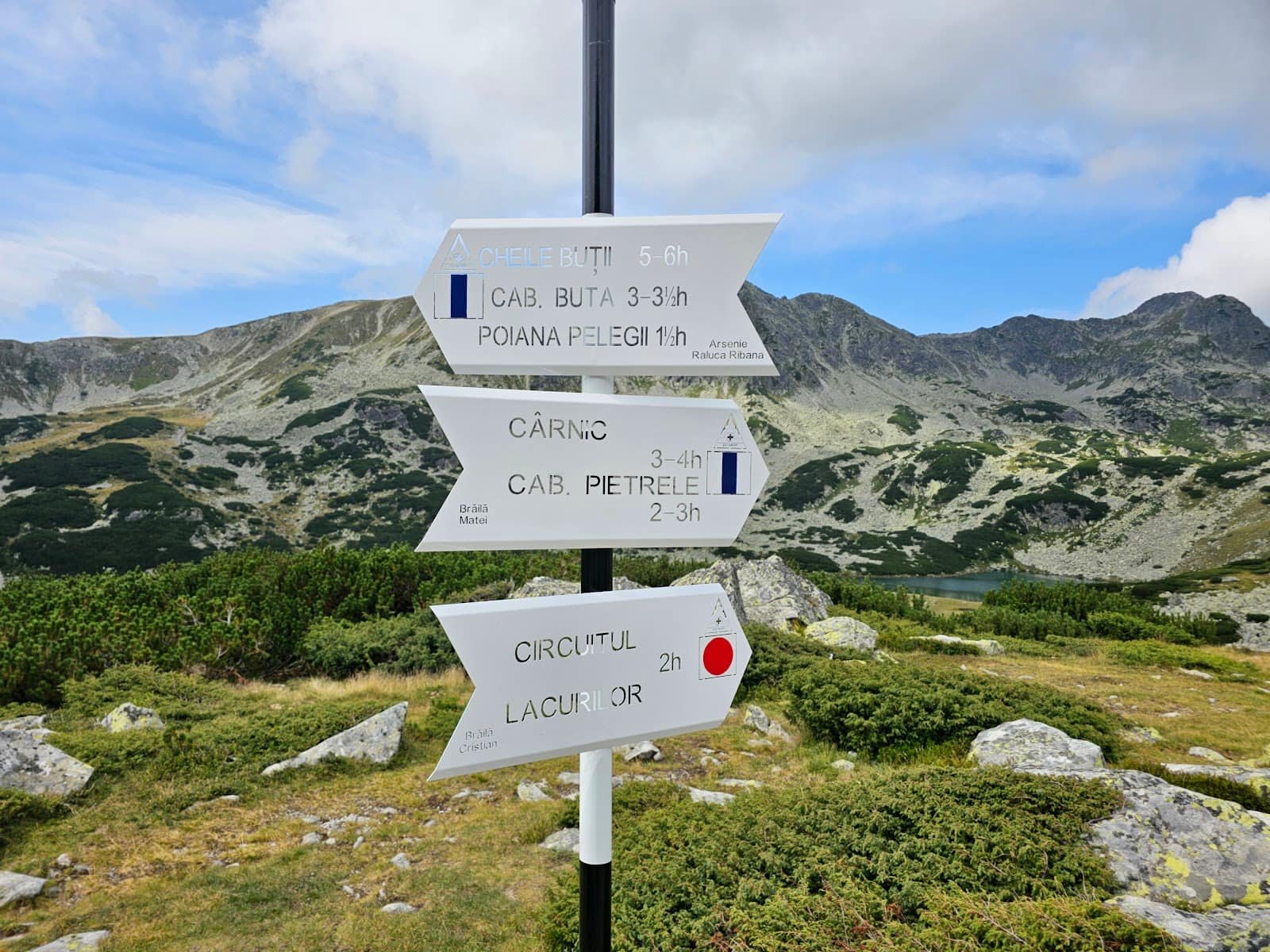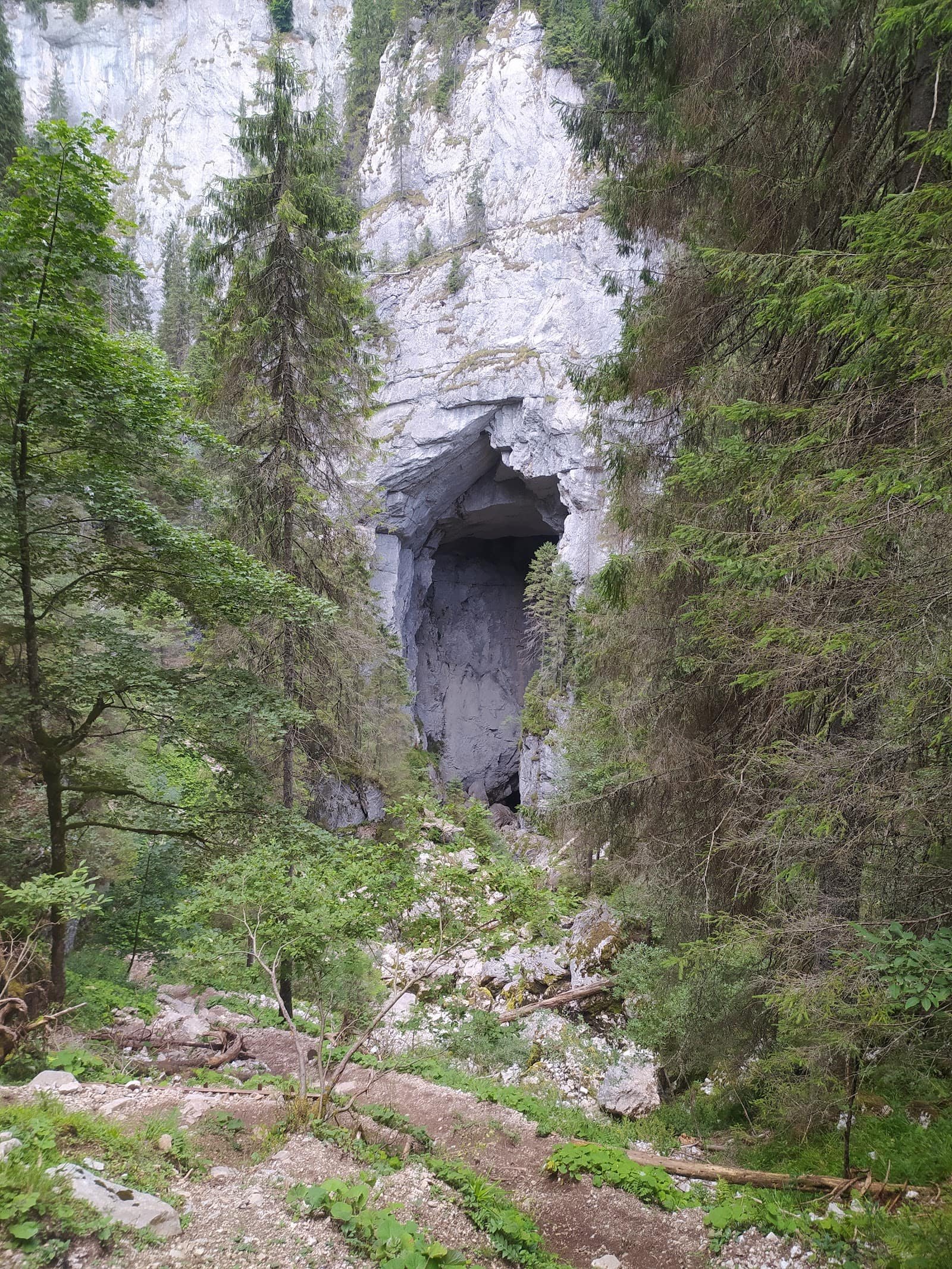
Two groups leave Zărnești on the same morning. One climbs towards the Piatra Craiului ridge, into a day of rock, wind and endless panorama. The other walks into the Zărnești Gorges, along a shaded canyon where the sun reaches for two hours a day. That evening both groups will say they went to the mountains. They will have had two experiences that bear no resemblance to each other.
Choosing between ridge and valley is not a question of level. It is a question of temperament — and, in summer, of risk management.
What the ridge does well
The ridge gives you the one thing a valley cannot: perspective. You see where you came from and where you're going, you see the neighbouring massifs, you see the weather approaching from far off. The Făgăraș ridge is the absolute benchmark, but even a short outing like Bâlea–Capra delivers the same visual vertigo.
The ridge also gives you clarity: up there, there are no small decisions — you go on or you turn back.
The cost is proportional. You are exposed to wind, direct sun and lightning. Water is almost entirely absent — on many ridges there is no source between the trailhead and the hut. Retreat is slow: if the weather turns halfway along, shelter is hours away. And the timetable is non-negotiable: on a ridge you climb at first light and descend before the afternoon storms. Read the safety guide beforehand, not afterwards.
What the valley does well
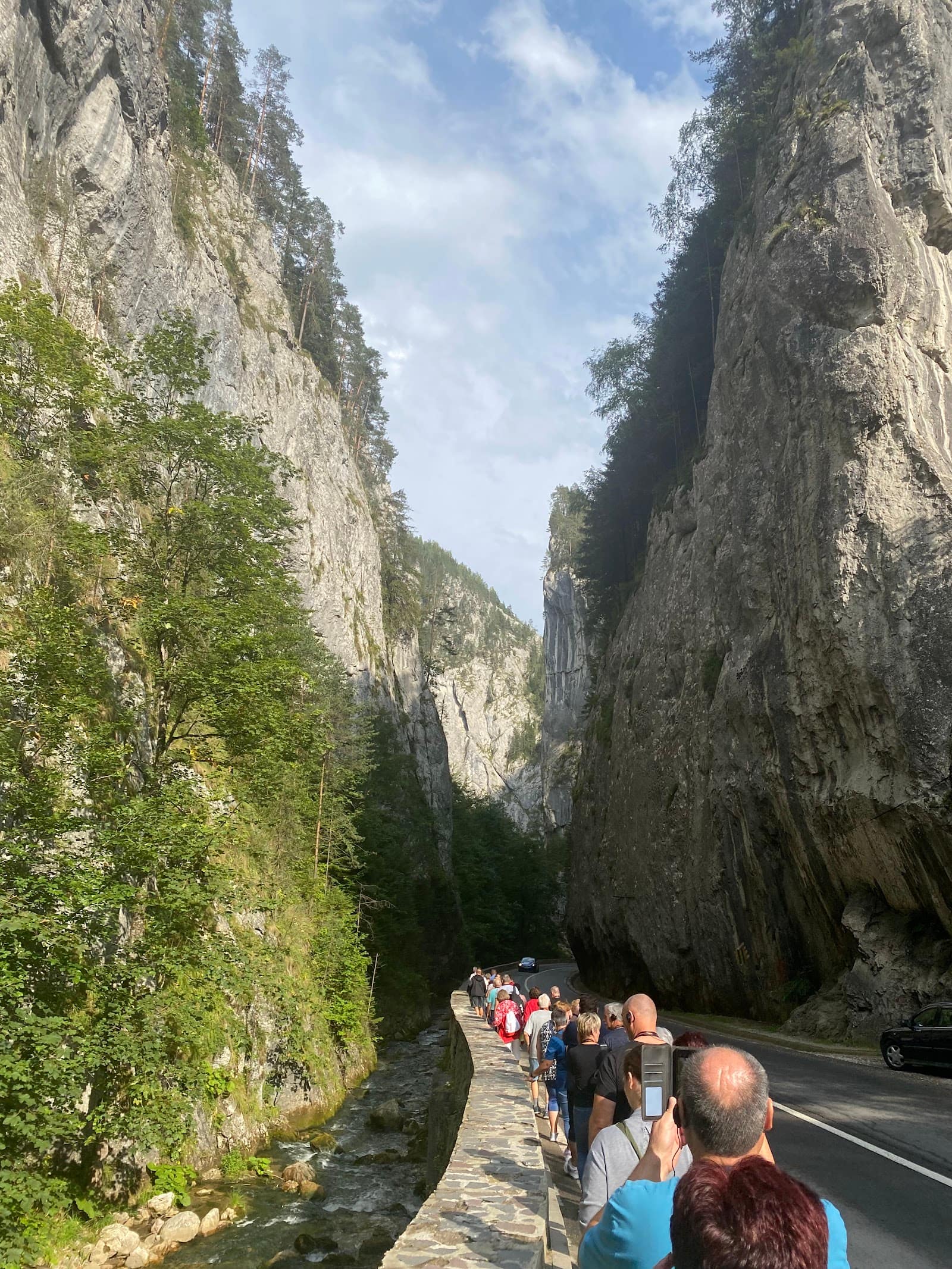
The valley is the near-perfect opposite: shade, water and a few degrees less on a scorching day. The Bicaz Gorges or the walk to Horses' Waterfall work exactly when the ridge is unbearable: midday, July, thirty degrees.
The valley is also forgiving: you can turn back at any point, shorten, lengthen, sit for an hour beside the water. Short routes to Urlătoarea Waterfall or to Cabana Curmătura are perfect for mixed groups, with children or with people who rarely walk in the mountains.
The cost: you don't see far. Valley scenery is intimate rather than spectacular — walls, forest, water, a strip of sky. And the risk changes rather than disappears: in a gorge, a downpour becomes dangerous, and wet stone is more slippery than it looks.
Head to head
Effort. The ridge demands endurance and a clear head when tired. The valley asks little, but can turn technical on sections with cables or ladders.
Exposure. Ridge: maximum — wind, sun, lightning. Valley: minimal, but with flash-flood and rockfall risk.
Water and shade. The most practical summer criterion. On a ridge you carry everything you drink. In a valley, water is everywhere and the shade is continuous.
Crowds. Short, accessible valleys are the busiest places in the mountains on summer weekends. The ridge filters naturally: after the first hour of climbing, few remain.
Scenery. The ridge delivers the panorama, the valley the detail — the difference between a landscape and a portrait.
Season window. The valley works from spring to late autumn. The ridge opens as the snow melts and closes at the first high-altitude snowfall. Check the weather, the live cameras and, if you're driving to an alpine trailhead, road conditions.
The verdict
Choose the ridge if you're trained, you can leave before sunrise, you have a stable forecast for the whole day, and your group moves at a similar pace: ridges punish uneven groups harder than any other kind of route.
Choose the valley if it's a heatwave, if the forecast is unstable, if you have children or beginners in the group, if you want a half-day outing, or if it's your first day in the area.
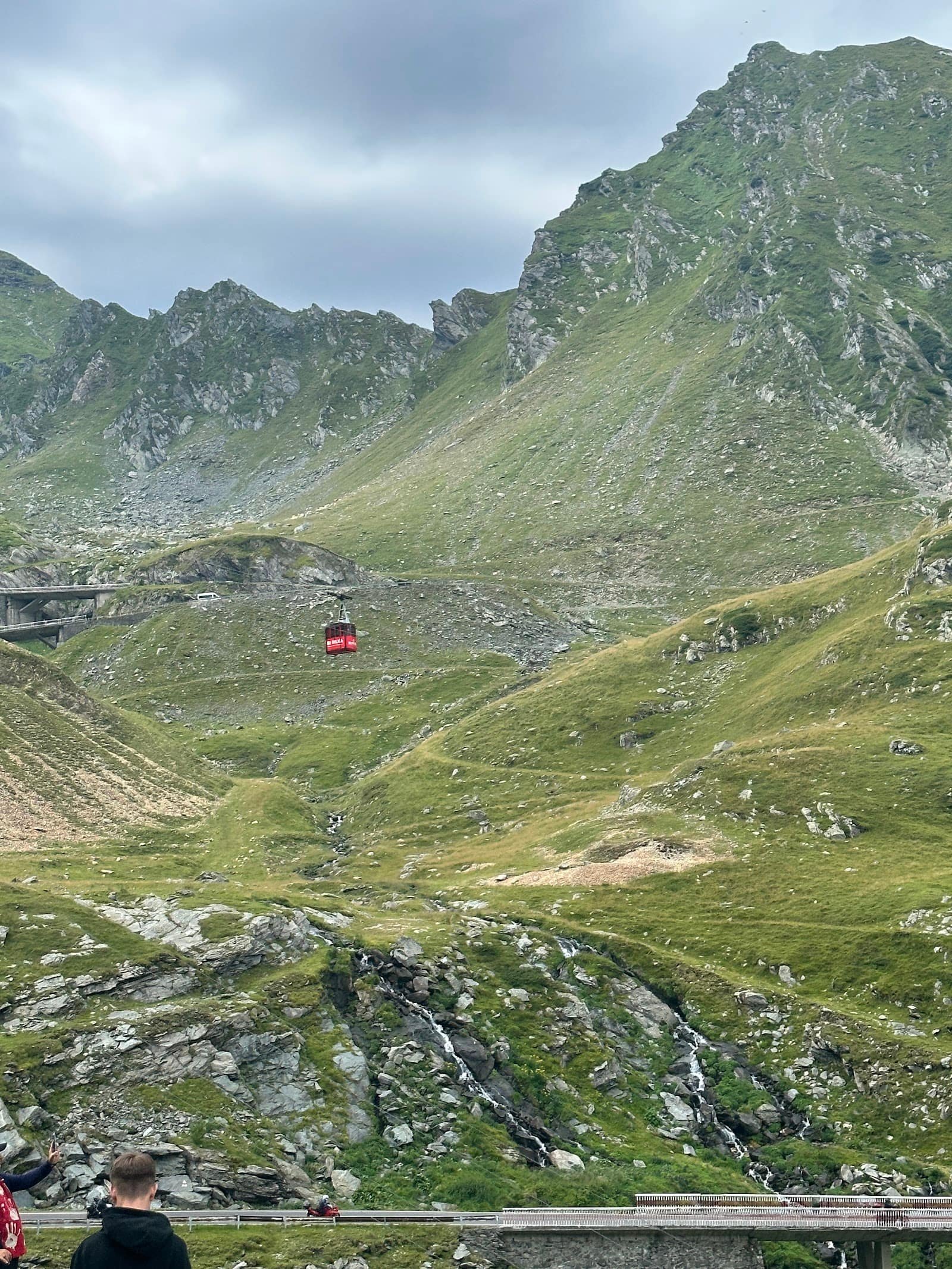
Our most frequently ignored advice: on a week-long holiday, alternate. One ridge day, one valley day. You protect your legs and you actually see the massif from both perspectives — from Piatra Craiului to Făgăraș and the Transfăgărășan.
Whatever you choose: start early, pack a thermal layer and a rain shell even at thirty degrees (see the gear guide), and save the Salvamont number.